Fermentation is one of the oldest food processes in the world - yet it remains one of the most important tools in modern dairy-free manufacturing. From yoghurt and cultured spreads to kefir drinks, fermentation plays a central role in developing flavour, texture and nutritional value, particularly in plant-based products.
As consumer interest in gut health, immunity and overall wellbeing continues to grow, fermented foods are increasingly recognised not just for how they taste, but for how they support health from the inside out. For dairy-free manufacturers, fermentation is also essential in creating products that deliver the creaminess, tang and complexity traditionally associated with dairy, without using milk.
At Met Foods, fermentation sits at the heart of what we do. By combining carefully selected live cultures with plant-based ingredients, we’re able to create yoghurt alternatives, creamy spreads and kefir drinks that are fully dairy-free, vegan-friendly and genuinely live - offering both great taste and functional benefits.
Fermentation is a natural biological process where microorganisms, typically bacteria or yeast break down carbohydrates such as sugars and starches into simpler compounds.
In food production, this process is carefully controlled. Specific strains of bacteria are introduced to a base ingredient, where they feed on natural sugars and convert them into lactic acid and other compounds. This transformation changes the foods:
In traditional dairy products like yoghurt and kefir, fermentation occurs when bacteria act on lactose (milk sugar). In plant-based products, fermentation works in a similar way, but the bacteria are grown and cultivated on plant substrates instead, allowing the process to remain entirely dairy-free.
Creating high-quality dairy-free alternatives is about far more than removing milk. Without fermentation, many plant-based products would lack the complexity, balance and mouthfeel consumers expect.
Fermentation plays a major role in developing the smooth, creamy textures associated with yoghurt, soft spreads and kefir drinks.
During fermentation, bacteria produce lactic acid and other metabolites that help proteins and fats interact differently. This creates body, thickness and structure, qualities that are especially important in dairy-free formulations, where plant proteins behave very differently from milk proteins.
Without fermentation, products can feel flat, watery or overly processed. With it, they gain a natural creaminess that feels familiar and satisfying.
One of fermentation’s most powerful effects is on flavour.
As bacteria ferment sugars, they create a wide range of flavour compounds that contribute to:
This is what gives yoghurt its characteristic freshness, spreads their cultured richness, and kefir its lightly sharp, refreshing profile. In plant-based products, fermentation helps soften earthy or bitter notes from raw ingredients, creating a cleaner, more rounded taste without relying on artificial flavourings.
Fermentation can make foods easier to digest.
As bacteria break down carbohydrates during fermentation, they partially “pre-digest” the food. This can reduce the presence of compounds that some people find difficult to tolerate, while also improving nutrient availability. For consumers seeking gentler foods that support digestive comfort, fermented products are often a natural choice.
Fermented foods are increasingly associated with gut health and for good reason. The live bacteria present in fermented products interact directly with the gut microbiome, the complex ecosystem of microorganisms that plays a crucial role in overall health.
A healthy gut microbiome has been linked to:
The gut and brain are closely connected via the gut-brain axis, meaning the state of our digestive system can influence how we feel both physically and mentally. By consuming foods that contain live and active cultures, people can help support the diversity and balance of their gut bacteria, a key factor in long-term health.
Not all fermented foods deliver the same benefits. Some products are made using live bacteria but are heat treated after fermentation. While this can improve shelf stability, it destroys the live cultures, meaning the final product no longer contains active bacteria.
At Met Foods, we never heat treat post-fermentation. This ensures that our products remain fully live and active when they reach consumers, delivering the gut-friendly benefits fermentation is known for.
At Met Foods, fermentation is both a science and a craft.
We use a carefully selected range of plant-grown bacterial cultures, ensuring our products are:
Our fermentation process includes a variety of well-researched cultures, such as:
In our kefir drinks, we also use Bifidobacterium BB-12, a widely studied strain associated with digestive support. Each strain plays a specific role in fermentation, contributing to flavour development, texture formation and gut-friendly functionality.
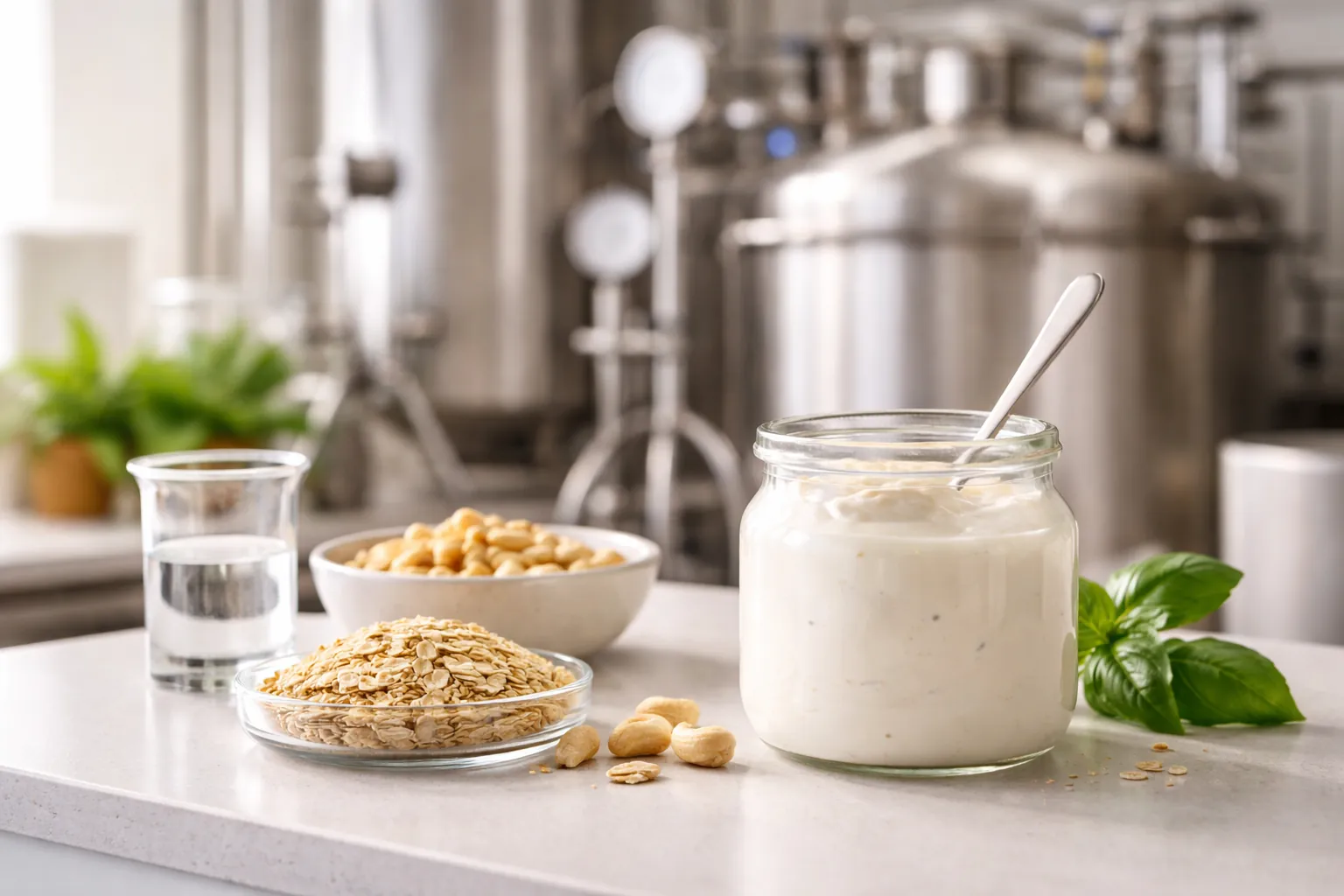
Using bacteria grown on a plant base is essential in dairy-free manufacturing.
It ensures:
This approach allows us to deliver the benefits of traditional fermented foods in a format that aligns with modern dietary needs.
As the dairy-free category continues to evolve, fermentation is becoming increasingly important, not just for taste, but for function.
Consumers are no longer satisfied with simple substitutes. They’re looking for products that:
Fermentation allows manufacturers to meet all three expectations. At Met Foods, we see fermentation not as a trend, but as a foundation — one that enables us to create dairy-free yoghurt alternatives, creamy spreads and kefir drinks that are rooted in science, guided by craftsmanship, and designed for modern living.